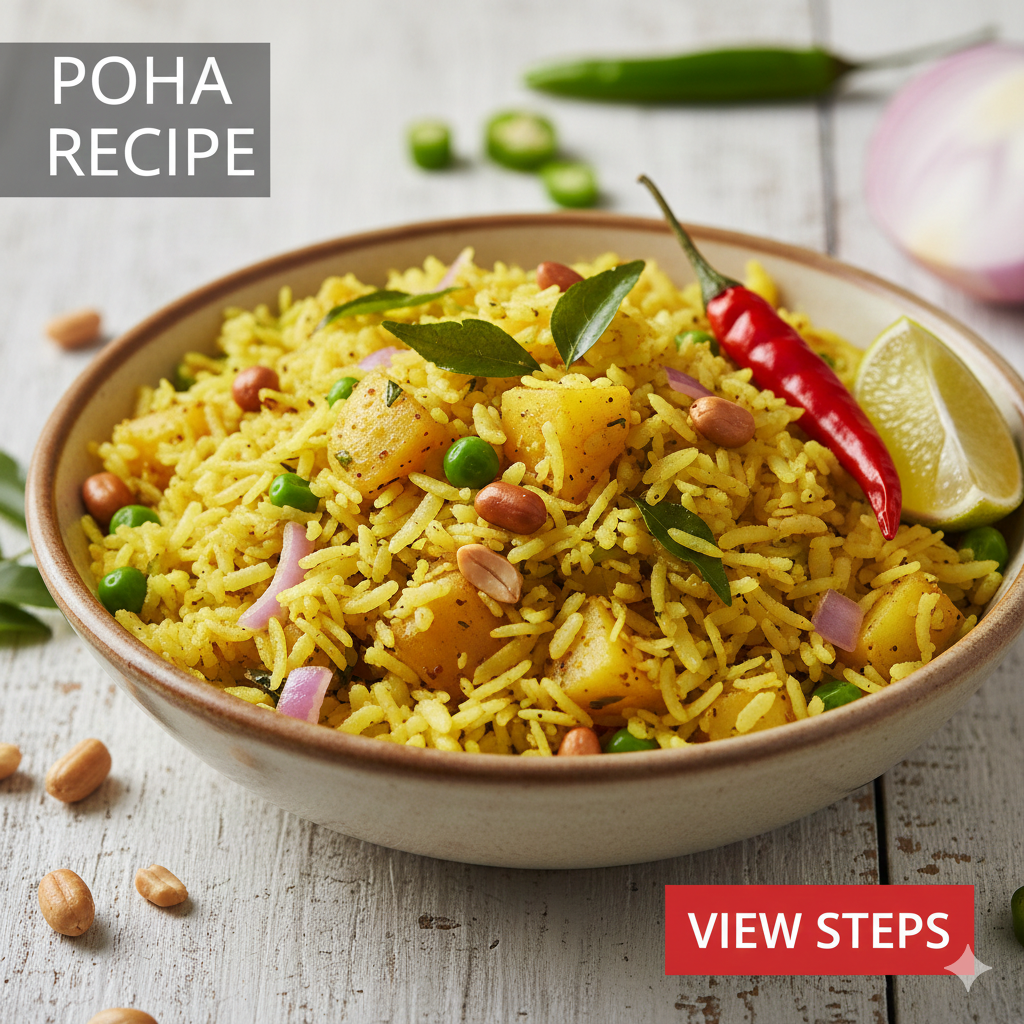

Poha. Yeah, that flattened rice thing. Honestly, it’s one of the easiest breakfasts ever. Light, tasty, and really quick. You don’t need much—just a few things lying around in the kitchen and boom, breakfast is ready. I grew up eating this almost every weekend, and honestly, it never gets boring.
It’s mostly famous in Maharashtra, Madhya Pradesh, Gujarat… but now I think everyone eats it. Each family has their own version. Some people like it sweet, some spicy, some just plain. And trust me, it’s one of those dishes you can mess up a little and it still tastes okay.
What is Poha?
Flattened rice. That’s basically it. Rice is parboiled, flattened, dried… then you just soak it a bit, cook it with some spices, onions maybe, peanuts, lemon, and that’s it. Done.
Traditional Poha has mustard seeds, curry leaves, green chilies, onions, turmeric, a little sugar sometimes, and peanuts. The smell while it cooks? Man, it’s heaven. It’s fast too, which is why I love it for mornings.
Why Poha is Actually Good for You
Okay, not just tasty. Some people think breakfast should be heavy, but honestly Poha is light, easy to digest, but still filling.
-
Gives quick energy (thanks carbs).
-
Easy on the stomach.
-
Low in calories (so yeah, diet-friendly).
-
Has some iron, good for blood.
-
Gluten-free (for those who care).
-
Can throw in veggies or sprouts if you want it extra healthy.
Basically, it’s healthy, fast, and tasty. The holy trinity of breakfast.
Ingredients
Here’s what you need for normal Poha (1–2 servings):
-
1 cup Poha (flattened rice)
-
1 medium onion, chopped
-
1–2 green chilies, chopped
-
½ tsp mustard seeds
-
8–10 curry leaves
-
¼ tsp turmeric powder
-
Salt, to taste
-
1–2 tsp sugar (optional)
-
2 tbsp oil (any light oil works)
-
1 lemon, cut into wedges
-
2 tbsp peanuts
-
Fresh coriander for garnish
Optional: peas, carrots, corn, potatoes. Whatever you have.
How to Make Poha
Honestly, super simple. I’ll try to explain step by step, but even if you’re messy in the kitchen it usually works.
Step 1: Prep the Poha
Rinse 1 cup flattened rice in a colander under running water for 1–2 mins. You just want it soft, not mushy. Drain and leave aside.
Step 2: Temper the spices
Heat oil in a pan. Add mustard seeds. Let them pop. Add curry leaves and green chilies. Sauté a few seconds. The smell is already making you hungry.
Step 3: Onions & peanuts
Add onions and sauté till slightly golden. Add peanuts and roast until crunchy. Seriously, don’t skip peanuts. It makes a big difference.
Step 4: Turmeric & Poha
Add turmeric and salt. Mix gently. Then fold in Poha carefully. Don’t mash it.
Step 5: Finish it
Add sugar if you want. Cover for 2–3 mins. Squeeze lemon on top. Garnish with coriander. Done. Serve hot.
Optional: Add sev if you want crunch. Or a dollop of yogurt if you like.
How I Usually Eat It
Honestly, I love it with lemon and a bit of sev on top. Some mornings I throw in peas or carrots, sometimes I just keep it simple. Either way, it’s always tasty. Chai goes perfect with it.
Variations
Poha is super flexible. Some versions I like:
-
Kanda Poha (Onion Poha) – Classic, simple, works every time.
-
Batata Poha – Add potatoes. Slightly heavier but nice.
-
Vegetable Poha – Carrots, peas, corn, bell peppers. Healthy.
-
Indori Poha – Street style, with sev and chutney. Messy but yummy.
-
Spicy Poha – More chilies, ginger, garlic. Not for everyone.
-
Sweet Poha – Add jaggery instead of sugar. Some people love it this way.
Tips (Stuff I Learned the Hard Way)
-
Don’t soak too long or mushy Poha. Sad.
-
Roast peanuts well. Crunchy = better taste.
-
Lemon at the end, not before. Otherwise soggy.
-
Low-medium heat works. High heat = burnt.
-
Garnish always. Looks better and tastes fresher.
Common Mistakes
-
Over-soaking → mushy Poha
-
Skipping peanuts/onions → bland
-
Too much oil → heavy
-
Cooking too long → sticky mess
-
Forgetting lemon → flat taste
FAQs
Q1: Can I make Poha the night before?
A: Not really. Poha turns soggy. You can store dry Poha separately and add lemon in morning.
Q2: Can I use thick Poha?
A: Thick works but takes longer to soften. Medium is easiest.
Q3: Can I skip onions?
A: Yeah, just add veggies or potatoes. Still tastes fine.
Q4: Is Poha okay for kids?
A: Totally. Light, mild, easy to digest.
Q5: Can I freeze Poha?
A: Nope. It turns mushy when reheated. Best fresh.
Final Thoughts
Poha is simple, cheap, quick, healthy, tasty. That’s basically all the boxes ticked. Everyone has their own twist. I eat it at least once a week. Some mornings spicy, some mornings mild. Some mornings I throw in whatever veggies I find. Either way, it’s always good.
Try it. Play around with it. Make it yours. And please, don’t skip lemon. Just don’t.